
日期: 2026 年 6 月 14 日

The Pentagon Keeps Releasing UFO Files. Americans Keep Believing. The Real Story May Be Neither.
By: James Vance – SeaPRwire – A potato-shaped object. A glowing sphere above a pond. Red lights moving in perfect sync across the night sky. None of these descriptions would look out of place in a science-fiction script. Yet they now appear inside newly released U.S. government documents. On June 12, the U.S. Department of Defense published its third batch of files related to extraterrestrial life, unidentified anomalous phenomena, and UFO reports. The public reaction was predictable. Curiosity surged. Speculation followed. The harder question is why every new disclosure seems to strengthen public belief even when officials continue saying they have found no evidence of alien involvement.
The newly released materials include 72 previously classified videos, photographs, audio recordings, and written reports. One video, recorded in the northeastern United States in 2024, shows a light source hovering above a pond. Witnesses described it as a plasma-like sphere. Its shape and brightness appeared to change over time, and smaller points of light seemed to separate from the main source before the object vanished after roughly 45 minutes. Another video from 2025 captured two red lights moving silently through the sky. Observers reported that the lights appeared to merge shortly before disappearing from view. The release also contains reconstructed illustrations based on witness testimony. In one 2022 case, five U.S. Army soldiers in Colorado reported seeing a milky-white floating object resembling a potato, covered with irregular fish-scale patterns. According to the report, it remained stationary for around two minutes before suddenly disappearing.
Officially, the Pentagon’s All-domain Anomaly Resolution Office maintains its position. After multiple investigations, it says there is still no evidence connecting these incidents to extraterrestrial life. Some reports may have conventional explanations. One account describing smaller glowing objects emerging from a larger orange light could potentially be linked to military illumination flares. Yet many cases remain unresolved. That distinction matters. “Unexplained” does not automatically mean “alien.” At the same time, an unresolved case creates a vacuum. Public imagination tends to fill that vacuum faster than scientific analysis can.
The polling numbers reveal a deeper shift. A recent survey of more than 2,000 Americans found that roughly 63% believe intelligent life exists beyond Earth. More strikingly, 21% believe humanity has already made contact. After recent government disclosures, about 30% reported becoming more convinced that extraterrestrials have visited Earth. Meanwhile, 84% think the federal government knows more about UFOs than it has publicly admitted. This gap between official statements and public trust may be the most important data point in the entire story. People are no longer debating whether strange sightings occur. They are debating whether institutions are telling the whole story.
The scientific community remains far more cautious. On June 1, the International Academy of Astronautics updated its guidance on the search for extraterrestrial intelligence for the first time in 15 years. The document argues that any response to an extraterrestrial intelligence signal should be treated as a decision for all humanity and should only occur after international consultation, particularly through the United Nations. In plain language, scientists are discussing governance before confirmation. Public culture is discussing visitors before evidence. Those are two very different conversations.
Every new document release generates headlines about mysterious objects. The longer-term issue may be trust, not aliens. Governments are opening archives. Citizens are asking harder questions. Scientists are urging restraint. Until stronger evidence appears, the most rational position remains surprisingly simple: keep investigating the phenomenon, but do not mistake uncertainty for proof.
Author bio: James Vance, a veteran international technology magazine columnist who specializes in analyzing emerging science, frontier technologies, public perception, and the intersection of government transparency and innovation.
Behind China’s 24 New Free Trade Zone Reforms Lies a Bigger Shift: Bonded Zones Are Being Rebuilt for the Domestic Economy
By: Elena Rostova – SeaPRwire – For years, China’s comprehensive bonded zones were designed around a simple formula. Raw materials came in. Finished goods went out. The domestic market sat largely outside that equation. That model generated enormous trade volume, but it now faces a ceiling. The newly released package of 24 reform measures signals something more significant than administrative fine-tuning. It reflects an effort to redesign bonded zones for a different stage of economic development.
The numbers explain why change became necessary. In 2025, China’s 168 comprehensive bonded zones generated 7.2 trillion yuan in imports and exports, accounting for 16% of the country’s total foreign trade. Yet policymakers increasingly see these zones as more than export-processing platforms. According to Pan Cheng, Director General of the Department of Free Trade Zones and Special Customs Supervision Areas under the General Administration of Customs, the reforms focus on four major areas. One priority is industrial upgrading. Bonded maintenance services are expanding beyond a positive-list approach. Companies will gradually gain greater flexibility to process repaired products, conduct further manufacturing activities, and explore domestic sales channels. In 2025 alone, bonded-zone maintenance businesses recorded 375.73 billion yuan in trade value.
Another reform reveals a deeper policy shift. During regulatory research, authorities found that many biotechnology companies wanted access to bonded R&D benefits but could not realistically relocate laboratories into bonded zones. Instead of forcing companies to move, regulators are testing a new approach. Qualified biotech firms outside the zones may receive bonded-zone customs registration codes, allowing them to access selected bonded R&D policies. In practical terms, the policy is moving toward the enterprise rather than requiring the enterprise to move toward the policy. The same logic appears in logistics reforms. New measures support aviation pre-clearance cargo stations, China-Europe Railway Express consolidation hubs, and international road transport centers. Earlier this year, the first Greater Mekong Subregion international road transport service departed from Qianhai Comprehensive Bonded Zone in Shenzhen and headed directly to Vietnam, creating a new logistics corridor linking the Guangdong-Hong Kong-Macao Greater Bay Area with Southeast Asia.
The technology layer may prove equally important. Customs authorities are expanding the use of artificial intelligence, the Internet of Things, blockchain, digital twins, and embedded network supervision systems. The goal is straightforward. Regulatory oversight becomes part of daily business operations rather than a separate process. Companies spend less time navigating paperwork. Data moves faster between bonded zones and ports. Local governments are also encouraged to establish integrated service platforms that provide one-stop support for businesses operating inside these zones. This reflects a broader governance trend. Regulatory efficiency is increasingly being treated as economic infrastructure.
The larger message is easy to miss. These reforms are not merely about making bonded zones bigger. They are about making them more connected to China’s domestic economy, innovation system, and international logistics network at the same time. The old model rewarded volume. The next model appears designed to reward flexibility. Whether a bonded zone succeeds in the coming decade may depend less on how many containers pass through its gates and more on how effectively it integrates manufacturing, research, logistics, and digital governance into a single operating platform.
Author bio: Elena Rostova, a public policy scholar specializing in trade governance, industrial development, and institutional reform, with extensive experience analyzing the intersection of regulation and economic competitiveness.

When a Car Wash Chain Gives Away Free Washes, the Real Story Is Hidden in the Map
By: Robert Sterling – SeaPRwire – Most grand opening announcements read the same. A ribbon gets cut. A few discounts are offered. Local officials smile for photos. Then the story disappears. What caught my attention about Tidal Wave Auto Spa’s newest location in Goldsboro, North Carolina, is not the free car washes. It is the pace and pattern behind the expansion. The company has now reached 23 locations across North Carolina and operates 320 express wash sites in 30 states. In today’s retail service market, that kind of geographic buildout says more about business confidence than any marketing campaign ever could.
The official announcement focuses on the new Goldsboro site at 1027 N Spence Ave and the opening promotions running from June 10 through June 21. Customers can receive a free Graph-X4® + Super Shammy premium wash, while new Clean Club members can access unlimited plans starting with a first-month offer of $9.97. Those are customer acquisition tools. The more interesting figure sits elsewhere. Tidal Wave plans to open three more North Carolina locations later this year. For operators in location-based service businesses, expansion decisions are rarely made on optimism alone. New sites require confidence in traffic flow, consumer demand, labor availability, and long-term local spending patterns.
There is another signal buried in the release. Tidal Wave is connecting its opening campaign to community fundraising. On June 18, the company will donate $1 for every free wash and $5 for every new Clean Club membership to the United Way of Wayne County. According to the company, it has already contributed more than $8 million to charitable organizations nationwide. Some observers dismiss these programs as public relations exercises. Experienced operators see something else. A growing chain entering a new market often needs local trust as much as customer volume. Community engagement lowers friction. It helps transform a new business from an outside brand into a familiar local presence.
The broader lesson is simple. The express car wash industry has become a scale business. Technology matters. Membership programs matter. Site selection matters even more. Tidal Wave’s story began more than 25 years ago in Thomaston, Georgia, as a small self-service wash founded by Scott and Hope Blackstock. Today it ranks as the nation’s fifth-largest conveyor car wash company with 320 locations. The Goldsboro opening is not a story about one new wash tunnel. It is another marker on a national expansion map, and competitors should probably be paying closer attention to that map than to the free wash coupons.
Author bio: Robert Sterling, a veteran entrepreneur and industry investor with decades of experience building regional businesses, evaluating growth strategies, and tracking long-term shifts in consumer service industries.

The Three-Day Forum Is a Sideshow: The Real Story Is Why Global Capital Keeps Returning to Seven Square Kilometers in Beijing
By: Christian Brooks – SeaPRwire – Most business forums end the same way. Executives exchange cards. Delegations pose for photos. Headlines fade within days. The harder question is what remains after the conference hall empties.
That is why the upcoming 2026 Beijing CBD Forum Annual Conference deserves a closer look. The headline figure is impressive enough. Nearly ten thousand participants from five continents are expected to attend in mid-June, with international speakers accounting for more than half of the lineup. Yet the forum itself is not the main story. The more revealing fact sits outside the venue. Within just seven square kilometers of Beijing CBD, nearly 16,000 foreign-funded institutions operate alongside 125 regional headquarters of multinational corporations. According to the organizers, that represents roughly half of Beijing’s multinational headquarters resources. Officially, the forum focuses on innovation, finance, legal-business integration, culture, and international consumption. The business message beneath those themes is straightforward. Beijing CBD wants to position itself as a place where international companies can enter China and expand without rebuilding every support system from scratch.
The facts released ahead of the event reinforce that positioning. Beijing CBD has developed one of China’s most concentrated clusters of professional services. International law firms, consulting companies, financial institutions, arbitration services, and compliance specialists operate within the district. Pilot programs involving cross-border data flows, support mechanisms for foreign financial institutions, and one-stop services for international talent have already been introduced. This year’s forum will add an Ambassadors’ Roundtable Dialogue with a regular communication mechanism and an “International Delegations’ China Tour” program for overseas business representatives. On paper, these are conference initiatives. In practical terms, they signal something investors usually value more than speeches. They signal access, responsiveness, and institutional familiarity. For foreign firms evaluating risk, process often matters as much as policy.
There is another layer that deserves attention. Many cities talk about artificial intelligence, digital transformation, and green technology. Beijing CBD is trying to connect those themes to existing commercial infrastructure rather than presenting them as marketing slogans. The district already hosts one of China’s densest concentrations of foreign financial institutions and cross-border capital activity. Technology firms are working alongside traditional industries. Legal and commercial service providers are deeply embedded in daily operations. Plans for a future one-stop platform covering legal services, auditing, intellectual property, and cross-border business support suggest that Beijing CBD is attempting to solve operational problems, not merely advertise opportunities. For multinational companies, that distinction matters. Market entry is rarely blocked by ambition. It is usually slowed by execution.
After decades of investing across multiple regions, I have learned that global capital tends to ignore grand narratives and follow practical conditions instead. Business leaders ultimately ask simple questions. Can deals get done? Can disputes be resolved? Can talent move efficiently? Can regulations be understood with reasonable certainty? Beijing CBD appears determined to answer those questions through infrastructure rather than promotion. The forum lasts three days. The district operates every day. For companies seeking a long-term foothold in China, that difference is where the real investment thesis begins.
Author bio: Christian Brooks, a veteran entrepreneur and investor with decades of experience expanding businesses across international markets, focusing on industrial development, capital allocation, and cross-border commercial strategy.
以色列空襲貝魯特,伊朗和談瀕臨崩盤:一場被盟友內訌毀掉的「最後一哩路」
(SeaPRwire) - By: Julian Holbrooke
伊朗議會議長兼首席談判代表穆罕默德·巴格爾·加利巴夫在週日發出了明確威脅。在以色列空襲貝魯特後,他揚言要中止據稱已進入最後階段的美伊和平談判。「猶太復國主義者對達希耶的侵略再次表明,美國要麼缺乏履行承諾的意願,要麼缺乏履行的能力。」他在X上寫道。他質問,若無意願也無能力,繼續談判有何意義。這不是空洞的姿態。伊朗一直堅持,任何最終協議都必須包含停止以色列對黎巴嫩真主黨的轟炸及結束對南黎的佔領。以色列拒絕接受這一點,已導致總理內塔尼亞胡與美國總統川普之間的裂痕。本月初,兩人甚至為此爆發了充滿髒話的電話爭吵。
[官方聲明文本]:川普在週六的Truth Social貼文中宣稱,原定次日簽署的協議將阻止伊朗獲得核武,並重新開放因戰事關閉數月、導致全球能源價格飆升的荷姆茲海峽。以色列方面則聲明,空襲是對真主黨持續攻擊以色列領土,包括當天早上一架恐怖無人機襲擊的回應。川普週日也批評了以色列的空襲,稱其「不該發生,尤其是在我們如此接近與伊朗達成和平協議的特殊日子」,呼籲雙方「停手」。巴基斯坦總理夏立夫週六在X上寫道,雙方「比以往任何時候都更接近達成和平協議」,預計24小時內敲定。
[地緣政治真實意圖]:然而,官方聲明掩蓋了深層的權力博弈。伊朗將黎巴嫩視為其區域影響力的關鍵延伸,保護真主黨是其核心安全紅線。對內塔尼亞胡而言,徹底打擊真主黨是國內政治與安全敘事的需要,他對川普的施壓「基本上不予理會」。據Axios報導,川普甚至在電話中罵內塔尼亞胡「瘋了」,指責其反應過度。美國發動戰爭的理由——摧毀伊朗飛彈計劃、終結其對中東代理民兵的支持——並未實現。以色列長達數月的轟炸、佔領南黎及對邊境村莊的廣泛破壞,也未能給予真主黨致命一擊,卻已造成黎巴嫩逾3700人死亡、100萬人流離失所。
這場空襲暴露了華盛頓對其最親密盟友影響力的局限性。川普急於達成一份能重開油路、穩定油價、並為其外交遺產添彩的協議。內塔尼亞胡則優先考慮國內的安全敘事與政治生存。兩者的戰略目標已然錯位。伊朗的威脅是將這種錯位武器化,以測試美國的斡旋誠意與實際控制力。協議的框架據Axios上月報導,是一個為期60天的諒解備忘錄,重開荷姆茲海峽,允許伊朗自由售油,伊朗承諾不尋求核武,美軍則在條件滿足後撤離。但這一切的前提,是華盛頓能否真正約束耶路撒冷。
地緣政治的鐘擺正在從「強制外交」擺向「盟友內耗」。當擔保人無法擔保其盟友的行為時,整個談判架構的信用便瞬間蒸發。以色列的炸彈不僅落在貝魯特的公寓樓上,更精準地落在了華盛頓與德黑蘭之間那紙脆弱協議的最後一頁上。這場空襲與其說是戰術行動,不如說是對美國中東領導權的一次殘酷壓力測試,而初步結果顯示:華盛頓的影響力正在其盟友的自行其是中快速流失。
Author bio: Julian Holbrooke,常為歐洲主要日報撰稿的海外國際關係分析師,專注於解構大國外交辭令背後的權力現實與戰略意圖。
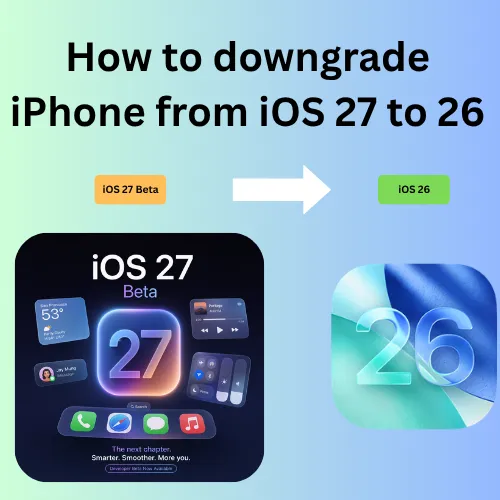
iOS 27升級難決?Tenorshare成破局關鍵!
By: Oliver Hawthorne
每年蘋果推出新iPhone作業系統,用戶都面臨升級與否的難題。今年在WWDC26和iOS 27到來前,這選擇更難了。新功能誘人,軟件初期漏洞又讓人焦慮。Tenorshare推出iOS 27升級降級助手,正是瞄準了這一矛盾。
Tenorshare以iOS修復和設備管理軟件聞名,此次推出免費線上決策工具。它不提供統一建議,而是讓用戶填寫iPhone型號、使用習慣、升級動機和應用依賴等信息,再給出從立即升級到延遲安裝等不同建議。工具還配備問題追蹤面板,監測iOS 27問題,並提供解釋和解決方案。
蘋果年度軟件更新讓用戶行為有了新變化。用戶既想嘗新,又擔心影響日常使用。Tenorshare抓住這一心理,不僅提供修復軟件,還成為蘋果發佈計劃和用戶採用之間的決策支持層。若用戶升級後後悔,其ReiBoot軟件可實現一鍵升級或降級,支持超150個系統問題,簡化從iOS 27降回iOS 26的路徑。在軟件更新越來越像風險管理的時代,Tenorshare站在了決策的兩端,未來有望在這一領域持續發揮重要作用。
Author bio: Oliver Hawthorne, 國際科技評論駐站首席記者,專注科技行業深度報道。

資產規模都是浮雲!東亞百年巨頭的轉型賽,比的是誰能先拋掉舊包袱
By: Robert Kensington
很多人只看資產數字就判定勝負。三菱集團擁有近21兆元人民幣資產,三星約2.1兆元,招商局集團預計2025年底達15.6兆元。但這錯過了真正的重點。關鍵不在於它們的過去,而在於它們如何應對AI、能源轉型、人口壓力和地緣政治不確定性。
官方數據顯示三種不同的成長模式。三菱始於1870年代的航運業,如今覆蓋重工、金融、電子等領域。但幕後它正在重組:2025年11月,三菱電機出售了多項工業馬達和泵業務,將資源轉向功率半導體、HVAC技術和數字解決方案。三星1938年以小型貿易公司起家,現今涉足電子、化工等領域。2024年三星電子收入達1.52兆元人民幣,較前一年增長16%。
招商局集團的模式獨特。它1872年由清朝「輪船招商局」成立,是中國第一家現代股份制企業。它經歷了帝國衰落、戰爭、改革和全球化。2025年底資產將達15.6兆元,「十四五」期間ROE維持在10%以上。研發支出達893億元,幾乎是上一個五年的兩倍,專利數量增長3.8倍。它成立了首席科學家委員會、AI實驗室、LNG造船專案,並在物流和金融領域應用行業大語言模型。其混合架構(國有資本加市場化管理)推動執行效率。
未來十年,最大的機構不一定獲得回報。能以最小內部阻力將資本、技術和人才轉向新產業的機構,才會贏得勝利。AI基礎設施、先進製造業等是新戰場。最快適應的企業,不會在意過去的資產排名,而會專注於明天的相關性。
Author bio: Robert Kensington,海外創業資深人士,擁有數十年實體經濟產業投資與擴張經驗。

兩岸只引進兩部台劇?背後的政策信號遠比劇情更關鍵
By: Adrian Kingsley
誰會把福建東南衛視引進兩部台劇當成大事?這絕不只是節目表的小調整。
6月12日,第18屆海峽論壇影視季在廈門舉行。主題為「融合發展,共同未來」。現場展示兩岸青年電影與AIGC影視作品。東南衛視當天公布首批引進的台灣劇。該台專注台灣相關節目已超過30年。2026年4月國台辦公布10項兩岸交流措施。其中一項允許優質台灣影視內容在大陸播出。
活動同時設立海峽影視版權交易中心。該中心已累積超過2萬集版權節目。還有3萬多分鐘的影視檔案與40多萬分鐘的閩南語配音資源。未來將提供版權服務與內容交易。也會建置版權資料庫與影視AI訓練資源。文化交流從單個項目起步,永續整合需要基礎設施。
政策成效不在紙上公告,而在業界實際跟進的速度。其他頻道、製作方與串流平台的選擇,將決定這波政策的真正影響。
Author bio: Adrian Kingsley, an internationally renowned scholar who has long studied public administration and social policy.

传单未死!大品牌悄然回归的真实逻辑
By: Logan Pierce
商业宣传褪去公关包装,MarketAnywhere展开全国扩张。企业花数千投数字广告,却难知邻居是否见消息。这成了MarketAnywhere扩张的核心。这家洛杉矶公司现全国配送,含传单、门挂、面对面营销。表面是传统营销更新,实则反映本地广告新现实:线上可见不自动等于社区知晓。
公司现提供统一平台管传单分发,从邻里到多州。超30年服务各类企业,含独立、区域、全国品牌等。服务包括多种宣传物料,强调地理定位,可聚焦特定区域,还有照片验证证分发完成。
扩张背后商业信号更有趣。过去十年数字广告讲精准,实际本地企业陷拥挤在线渠道,成本涨难抓注意。水管公司不需全国知,社区餐厅难受益远距印象。MarketAnywhere围绕实际需求,整合多种服务卖便利,少供应商少协调,控本地执行。
多年来物理分发被当过时招,现市场变。数字获客成本攀升,重地理相关的直接社区营销重生。能全国运营又本地配送的公司或控广告业韧性角落。这行赢家可能不是算法最精的,而是能把消息送对门的。Author bio: Logan Pierce, veteran entrepreneur with decades in building businesses, analyzing local market shifts.